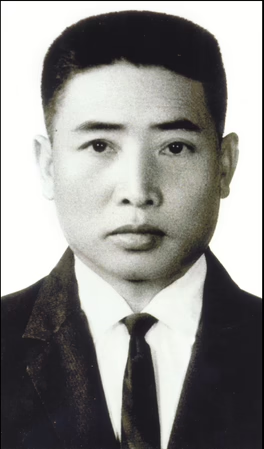
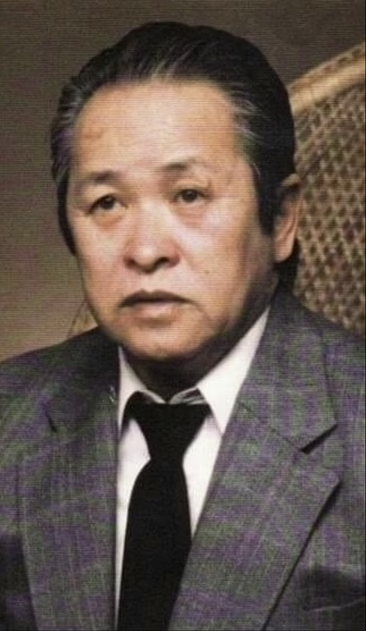
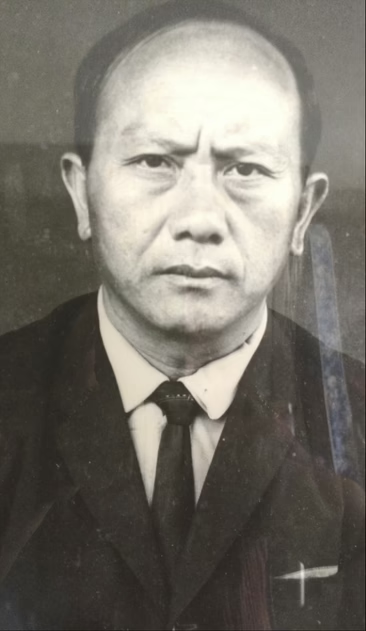
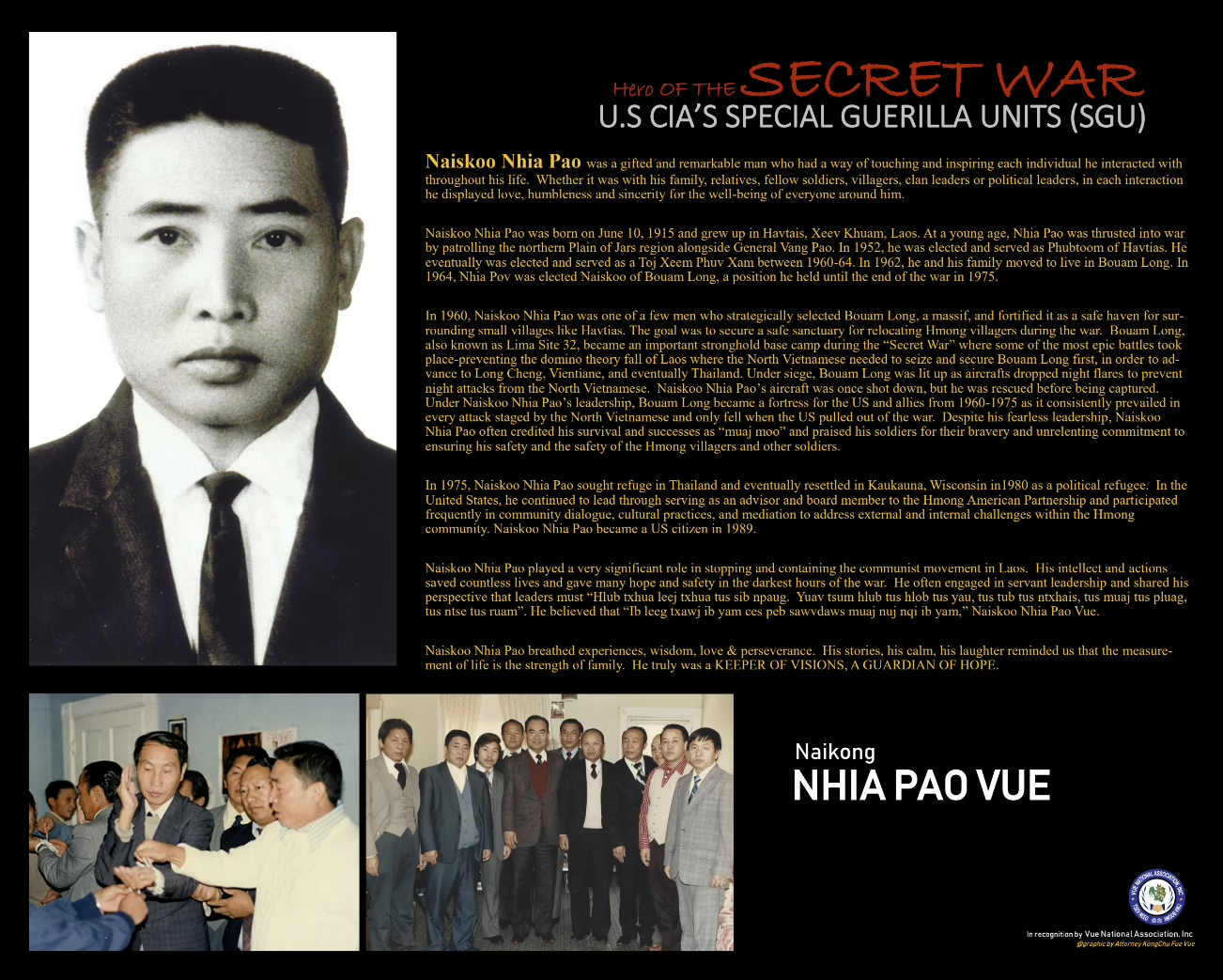
Naiskoo Nhia Pao was a gifted and remarkable man who had a way of touching and inspiring each individual he interacted with throughout his life. Whether it was with his family, relatives, fellow soldiers, villagers, clan leaders or political leaders, in each interaction he displayed love, humbleness and sincerity for the well-being of everyone around him.
Naiskoo Nhia Pao was born on June 10, 1915 and grew up in Havtais, Xeev Khuam, Laos. At a young age, Nhia Pao was thrusted into war by patrolling the northern Plain of Jars region alongside General Vang Pao. In 1952, he was elected and served as Phubtoom of Havtias. He eventually was elected and served as a Toj Xeem Phuv Xam between 1960-64. In 1962, he and his family moved to live in Bouam Long. In 1964, Nhia Pov was elected Naiskoo of Bouam Long, a position he held until the end of the war in 1975.
In 1960, Naiskoo Nhia Pao was one of a few men who strategically selected Bouam Long, a massif, and fortified it as a safe haven for surrounding small villages like Havtias. The goal was to secure a safe sanctuary for relocating Hmong villagers during the war. Bouam Long, also known as Lima Site 32, became an important stronghold base camp during the “Secret War” where some of the most epic battles took place-preventing the domino theory fall of Laos where the North Vietnamese needed to seize and secure Bouam Long first, in order to advance to Long Cheng, Vientiane, and eventually Thailand. Under siege, Bouam Long was lit up as aircraft dropped night flares to prevent night attacks from the North Vietnamese. Naiskoo Nhia Pao’s aircraft was once shot down, but he was rescued before being captured. Under Naiskoo Nhia Pao’s leadership, Bouam Long became a fortress for the US and allies from 1960-1975 as it consistently prevailed in every attack staged by the North Vietnamese and only fell when the US pulled out of the war. Despite his fearless leadership, Naiskoo Nhia Pao often credited his survival and successes as “muaj moo” and praised his soldiers for their bravery and unrelenting commitment to ensuring his safety and the safety of the Hmong villagers and other soldiers.
In 1975, Naiskoo Nhia Pao sought refuge in Thailand and eventually resettled in Kaukauna, Wisconsin in1980 as a political refugee. In the United States, he continued to lead through serving as an advisor and board member to the Hmong American Partnership and participated frequently in community dialogue, cultural practices, and mediation to address external and internal challenges within the Hmong community. Naiskoo Nhia Pao became a US citizen in 1989.
Naiskoo Nhia Pao played a very significant role in stopping and containing the communist movement in Laos. His intellect and actions saved countless lives and gave many hope and safety in the darkest hours of the war. He often engaged in servant leadership and shared his perspective that leaders must “Hlub txhua leej txhua tus sib npaug. Yuav tsum hlub tus hlob tus yau, tus tub tus ntxhais, tus muaj tus pluag, tus ntse tus ruam”. He believed that “Ib leeg txawj ib yam ces peb sawvdaws muaj nuj nqi ib yam,” Naiskoo Nhia Pao Vue.
Naiskoo Nhia Pao breathed experiences, wisdom, love & perseverance. His stories, his calm, his laughter reminded us that the measurement of life is the strength of family. He truly was a KEEPER OF VISIONS, A GUARDIAN OF HOPE.
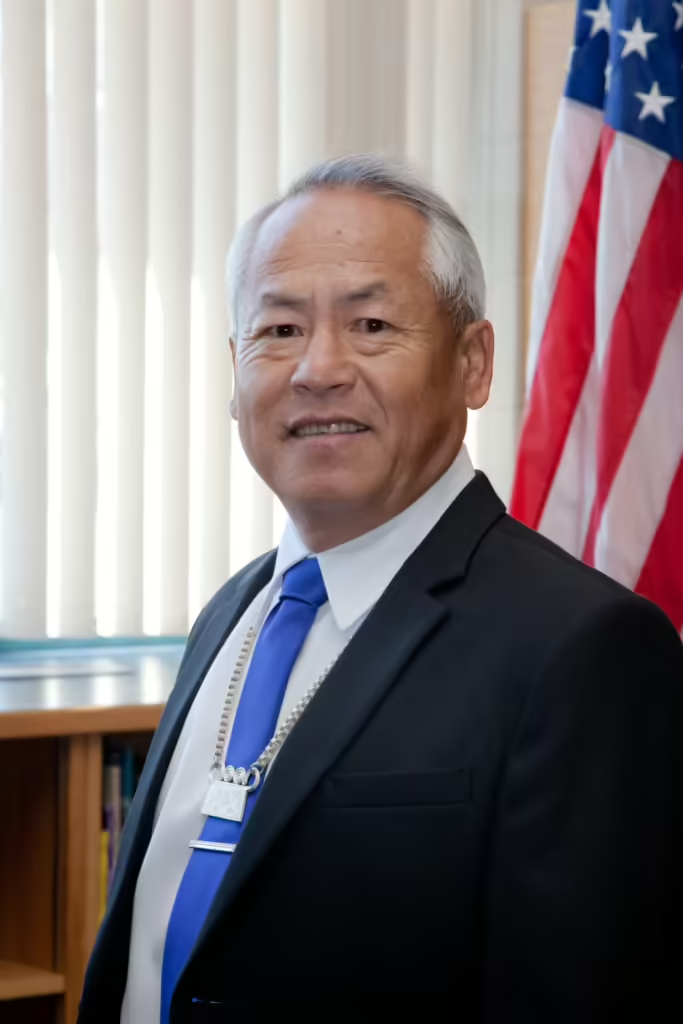
Putong Neng Mai Vue is the eldest son of Mr. and Mrs. Zoov Txiab Vwj. Born and resided in Nam Lum (Naj Loob) village, and resided in Nam La (Naj Las) village, Toj xeem Phu Hua Xang( held by his cousin Nkaj Looj Vwj), Moung Vang Xai (Now is part of Xaisomboun province), Xiang Khuang Province, Laos. It isunclear exactly when Neng Mai was born but he would be born around the mid 1930s. Neng Mai has three marriages due to his spouses passing away. His first marriage was to Shoua Lee, 2nd marriage was True Yang, and 3rd is Yeng Yang. Most of his descendants lived in Michigan, Minnesota and Wisconsin with a few residing around the USA and Canada.
Neng Mai was known for his excellent leadership in social justice, compassion, quick thinking and good problem solving skills. He was selected to be the village leader (Nai npab) of Nam Lum and Nam La villages at the age 20. In 1958, he was promoted to be a putong (phub toom) in the region. Putong is a district justice person (similar to a district judge in the USA) for villages in a Toj Xeem. He held the putong title until the fall of Laos to the Communist regime in 1975.
Neng Mai Vue passed away on November 12, 1993 in Lansing, Michigan. Neng Mai has a total of 13 children. Ntxoov Vaj (Koua), Vam Hawj (Fong), Siv Yis (deceased), Vaj Tsheej(deceased), Mai Yaj (deceased), Kia, Neej Vam (Tswj Keej), Nom Tsas, Kab (deceased), Yub (deceased), Sai (Zeb), Mee Xiong and Mai Yang Vang.
Vue National Association’s dedication to supporting Hmong Vue families and preserving culture is invaluable. Providing family services, community support, and prioritizing education across social-economic levels.
Together We Can
“We will strive to improve in communications within our clan and the communities. We will conduct a study, survey and gather data to measure success in our children’s education. We will offer scholarship programs to our graduates as well as mentorship. We will establish an economic support system to build an incentives program to promote our businesses and family members. Most important of all, we will develop a uniform cultural practice system to our Traditional and Christian believers by providing better information and resources. Also, we will build a model to eliminate the gaps among Youths, Parents, Hmong Traditional, and Christianity practices”
Vue National Association is an independent non-profit organization dedicated to enhancing the lives of its members through education, social and economic development, and cultural preservation. We aim to empower our community by providing resources, support, and opportunities for personal growth and advancement. Our organization’s mission is to create a safe and inclusive environment where members can learn, connect, and thrive. We strive to preserve and celebrate our unique cultural heritage, while also fostering a sense of belonging and unity among our members.Through our various programs and services, Vue National Association aims to make a positive impact on the lives of our members and the broader community, promoting social and economic development, and contributing to a more inclusive and diverse society.
To be a self-sustaining umbrella organization that supports and elevates local Vue family chapters. The vision of Vue National Association is to enhance the lives of its members through education, social and economic development, and cultural preservation. They aim to empower the community by providing resources, support, and opportunities for personal growth and advancement. The organization strives to create a safe and inclusive environment where members can learn, connect, and thrive, while preserving and celebrating their unique cultural heritage.
Our Vision To be a self-sustaining umbrella organization that supports and elevates local Vue family chapters.
Our Mission To improve the quality of life, enhance the growth and development of its members through education, economic social development, and cultural/family values.
We Care Helping family grow, learn, and keep our special traditions alive. Together, we’re like a strong tree with deep roots!
VNA Education Committee January 2025 Newsletter
Hello and welcome to VNA Education committee’s first newsletter! This committee is led by Txwj Tsuas Vu, Education Director and Education Committee Chair for Vue National Association. Monica Yang Vu, Kong Chu Fue Vue, Qe Yang Vue, David Vue, Cindy Her Vue, Cha Pao Vue and Mai Yang Vue are the dedicated and passionate individuals who complete the rest of our committee.
The work we do is more than just about providing resources – it’s about creating opportunities for learning, growth, and empowerment. In alignment with these values, VNA has awarded 31 scholarships since 2014. We are pleased to continue this tradition and are offering two, $1000 scholarships for undergraduate students and two, $1000 scholarships for graduate students for the 2024-2025 school year. The scholarship application is now opened and all Vue students currently enrolled in college are encouraged to apply at: https://www.vuenational.org/scholarships/.
The application deadline is June 1, 2025. Scholarship recipients will be awarded at the Vue Unity Conference in Minnesota on August 2, 2025.
We are extremely proud of the educational successes within our Vue family. Many of our scholarship recipients have become medical doctors, engineers, entrepreneurs, and teachers, among other professions. In order to track the scholarly achievements of the Vue family since resettling in this country, our objective is to gather a list of all college graduates across the nation and update this database annually. If you earned a college degree(s) or have information about other college graduates in your family, please contact your state’s Vue Family Organization chapter. You can find your local chapter’s contact information at https://www.vuenational.org/vna-state-rep/ . You may also contact us at info@vuenational.org if you are unable to find your chapter’s representative. Your name and degree will be available publicly and showcased at the Vue Unity conference. Please let us know if you prefer to keep your information private.
We look forward to all that we will accomplish together!
Vue Unity Conference 2025
PURPOSE The purpose is to unite the Vue Family under one umbrella and celebrate 50 years of Vue’s accomplishments in the United States. It is a vital milestone to bring Vues across the United States to reflect on our past, recognize our present, and plan for our future.
GOAL The goal is to improve the Vue family’s quality of life through knowledge sharing and meaningful connection by engaging Vuesacross the United States. Through strong support and collaboration, Vues can unite under an organized structure to achieve success beyond imagination.
SCOPE The scope includes a one-day educational event featuring learning activities, motivational speeches, panel discussions, workshops, networking, recognition, talent showcasing, performers, and night entertainment.
THEME The theme for the Vue Unity Conference is celebrating 50 years of Vue’s accomplishments in the United States. The Vue family has accomplished many successes in education, politics, sports, business, and art within the last 50 years, significant for a once-in-a-lifetime recognition and celebration.
Date : August 2, 2025
Day Event Location: Banquets of Minnesota 6310 Hwy 65 NE Fridley, MN 55432 8:00 am – 5:00 pm
Night Event Location: Thai Twist Restaurant & Banquet Hall 1009 109th Ave NE Blaine, MN 55434 7:00 am – 12:00 am
VUE UNITY DAY PROGRAMS 8:00 AM – 12:00 PM – Family & Unity Speech – Success Speech – State Leaders Presentation – Scholarship Awards – Leadership Induction Ceremony – Networking Session
VUE UNITY NIGHT PROGRAMS 7:00 PM – 12:00 AM – Performers – Talent shows – Entertainment – Networking
EVENT MAIN SPONSORS
Thank you for your support and love for our Vue family. Your sponsorship makes our knowledge-sharing and educational programs possible. It allows the Vue National Association to improve the quality of life of our Vue families and elevate the younger generations into the future. We express our sincerest gratitude for your contribution on behalf of the Vue National Association Board of Directors.
Attorney KongChuFue & Qe Vue Vue Law Office 784 Univeristy Ave W St Paul MN 55104 Website: vuelawfirm.com
Mr. Tsong Lee & Mrs. Sia Vue Tri-Star Tax Consultant, LLC 995 University Ave W, #112 St Paul, MN 55104 Website: tristartaxservice.com
Mr. NkajHuas & Chi Vue Faithful Mold Polishing Express 4485 Crystal Pkwy Kent, OH 44240
Mr. Chu Wung Vu Koobmoo Funeral Chapel and Spiritual Center 1259 Gervais Ave. Maplewood, MN 55109
Mr. Youa Yeng & Mrs.Tong Vue Hugo, MN
Dr. Shoua Vue & Mr. Wa Xa Lee CareWell, Inc 200 Mason Dr., Ste 200 Onalaska, WI 54650
Mr. Song Lue & Shoua Vue SoSiab Care, Inc. 3208 E. Washington Ave Madison, WI 53704 Website: sosiabcare.com
Mr. Senhpao & Mrs. Cherry Vue Thai Twist Restaurant & Banquet Hall 1009 109th Ave NE Blaine, MN 55434 Website: thaitwistcuisine.com
Mr. NeejXai Vue & Mr.Rome Her Eternal Caskets & Monuments 1821 N. Helm Ave., #111 Fresno, CA 93727 Website: eternalcasketsmonuments.com
Mr. Ntxoov Zeb & Mrs.Sua Vwj Denver, CO
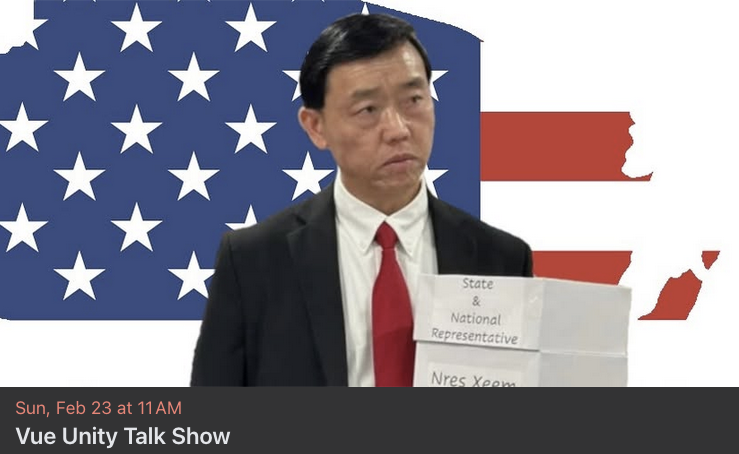
Vue Unity Talk Show Upcoming Talks Show Wisconsin Vue President Vam Suav Vwj
Major Ntsuab Pov Vwj yog nyob zos HavTias (Hoy Hong) Muang Kham, XeevKhuam NplogTeb. Txiv thiab niam yog Txwj Kawm Vwj thiab Ntxhais Lauj. Nws muaj ob tug pojniam: Sua Xyooj thiab Huas Muas. Tag nrho lawv muaj 15 tus menyuam: 4 leej tub, 11 leej ntxhais, muaj 45 tus Xeeb Ntxwv thiab 11 tus Xeeb Ntxwv Xeeb Ntxwv.
Ntsuab Pov Vwj pib ua ThabHam rau Nom Tswv HuavTais Nplog (Royal Lao Army) xyoo 1961 mus txog rau xyoo 1975. Nws nyob qab tswj hwm ntawn General Vang Pao cov ThabHam Phaj 2 (Military Region 2). Nws ua hauj lwm rau ntawm Colonial Txawj Pov Muas nyob rau Pawg 27 Lismasses (LS 32) NpuasLoom. Nws yog tus neeg Soj ntsuam (Detative) nyob rau hauv HoobKas 2(office 2). Tes dej num yog los soj ntsuam cov neeg phem sab hauv thiab sab nrauv. Tsis tas li ntawv soj ntsuam xyuas seb Nyab Laj yuav tuaj tua lub sij hawm twg thiab Xwj cov ThabHam thiab pejxeem Nplog liab kiav los thawj.
Tom qab xyoo 1975 uas CIA tau tawm hauv Nplog Teb lawm. Nws tau raug Nplog Liab coj mus kwm (Education Camp). Nws kuj tau khiav tawm hauv Education camp los nyob havzoo ua (CobFab) tiv thaib lajmeej pejxeem txog ntua rau xyoo 1980. Nws thiaj tau tawm rov los ua pejxeem rau Nplog Liab vim tsis muaj hau kev lawm. Xyoo 1981, nws kuj tau coj ib pab pejxeem rov mus ua noj ua haus nyob rau sab Hav Tais Muang Kham. Nws kuj tau ua tus Tswv Zos xyoo 1981-1984. Thaum lub 2 hli ntuj tim 28, 1984, Tsoom fwv Nplog Liab tau tuaj ntes nws hauv zoo, lawv tau sib tuaj thiaj ua rau Ntsuab Pov tau raug Nplog Liab ntes thiab tua tuag. Nws tau txog tej laj mej pej xeem thiab pojniam menyuab rau tom qab.
Ntsuab Pov Vwj tau ua ib tug Tub Rog thiab thawj coj zoo pub rau ib tsoom peej xeem, kwvtij, pojniam menyuam. Ntau leej neeg tau kawm txoj kev zoo los ntawm nws mus ua lawv lub neej. Thaum nws tau ncaim suav daws mus lawm tej pejxeem,kwvtij, pojniam menyuam,thiab tej phoojywg quaj thiab tshua nws. Vim nws yog ib tug zoo thawj coj suav daws yuav tsis hnab qab nws mus tag ib txhis.
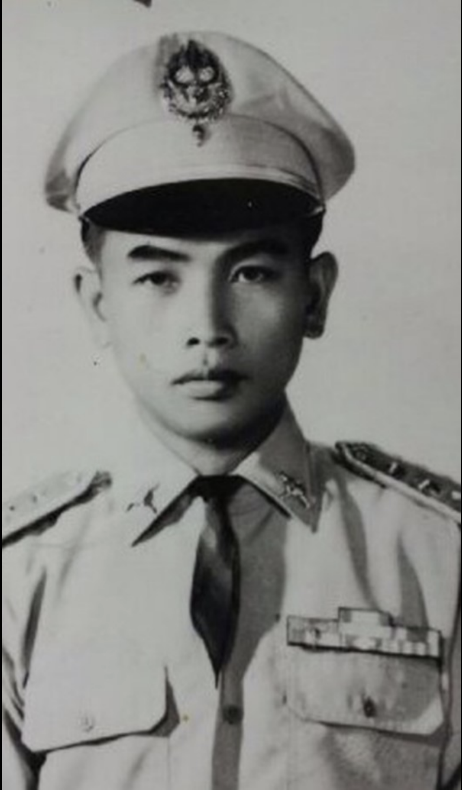
Major Chouader Vue was born on June 6, 1937, in the village of Thamtat, Muang Ngat, Xieng Khuang, Laos to Bliatong Vue and Ying Lee. He had three wives: Chee Lee, Chia Lee, and Mao Xiong. Together, they have ten children: five sons, five daughters, and twenty-six grand-children.
ChouaderVue’S military career started when he was recruited into the Royal Lao Army in 1959 and ended in 1974. In 1961, he had his first military training in Houa Hin, Songkhla province, Thailand as a paratrooper. In 1962 after returning from Thailand, he served under the command of General Vang Pao in Military Region 2 (MRII) in Long Cheng, South Plane of Jars, Xieng Khuang province. His troops and he fought many major battles against Lao Communist forces throughout the Northern part of Laos, Xieng Khuang, Huaphan, and Phong Saly provinces. He was wounded twice: a shot in the left leg, and a shrapnel in the shoulder.
Chouader Vue received many trainings in Thailand. He first trained at Houa Hin in 1961, Phitsnoulauk in 1973, and Phou Khao Kheoui, Laos. In 1968, he also had a special training Etat-major (Administrative staff) in Longcheng. Chouader Vue held many positions from group leader (Nai Mouat) to Battalion Commander (Nai Kongphan). From 1959 to 1974, he attained a rank of Sergeant to Major.
When the secret war in Laos ended in mid 1974, CIA withdrew from Laos and stopped its sup- port. An agreement to end the war in Laos was signed between Royal Lao government and Pathet lao (Lao Communist) party. Therefore, Colonel Chongkoua Vue, the commander of Battalion 209, offered Chouader Vue to end his military service in exchange for a civil position as Nai Kong. He accepted and assumed the name Nai Kong Chouader Vue. At the end of 1975, Chouader Vue escaped to Thailand to avoid persecution from Lao Communist and became a refugee. His family immigrated to the United States of America in 1980 and resided inAkron, Ohio. He was employed as a machinist with B&C Machine. In 1989, he passed away due to a stroke at his residence in Tallmadge, Ohio. He left behind three wives, ten children, twenty-six grand children, relatives and friends across the country.
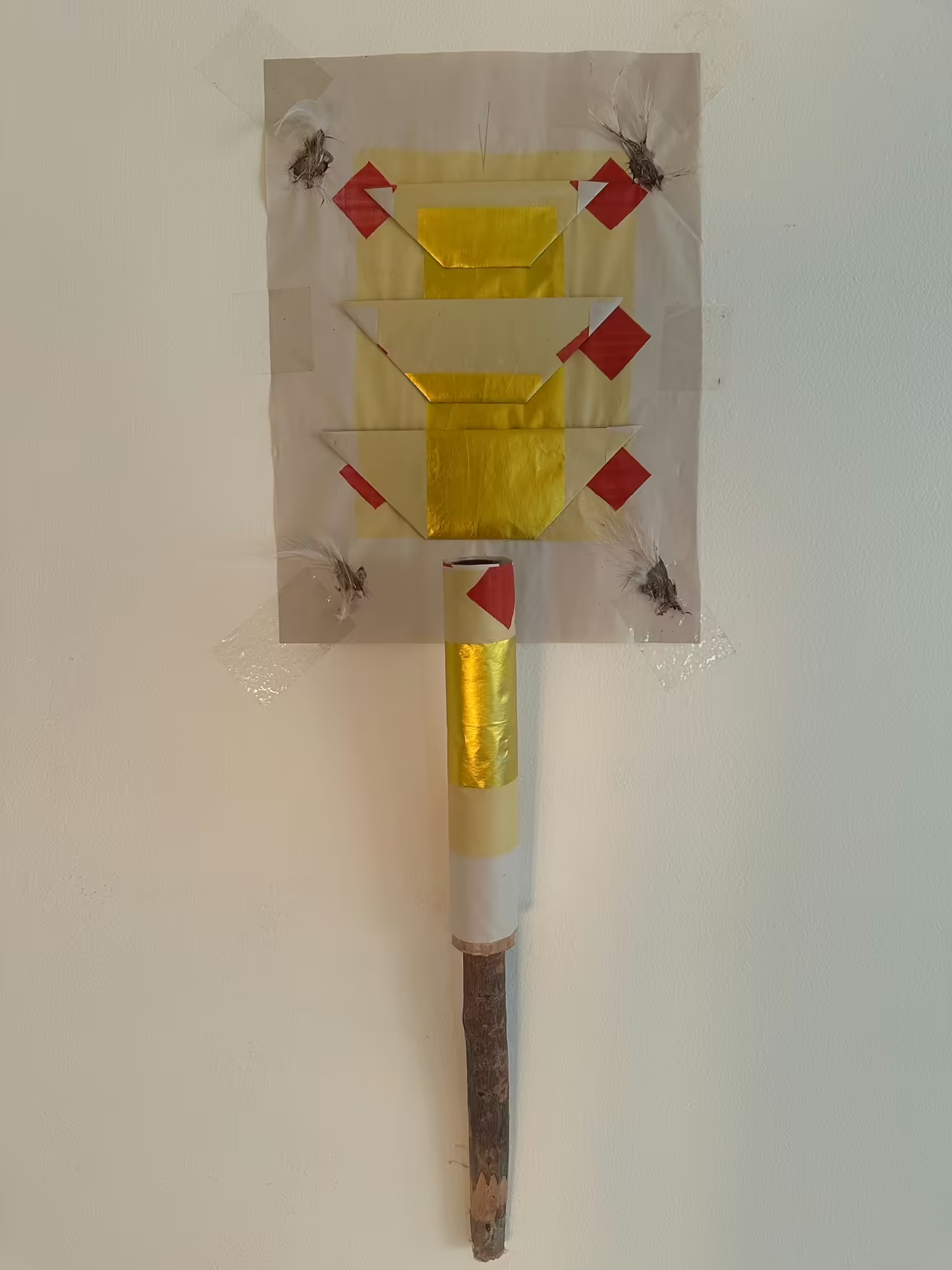
1 tug lau qaib dawb los sis lau qaib liab qua qaws.
3 ntshuas ntawv, 3 daim xav theej, 3 tswm xyab, 3 lub yaj khaum ceeb khaum thiab ua ib lub wm kab tshiab, muab lub wm kab qub tev cia nrog cov ntawv, muab 3 tswm yab hlawv rau tus xwm kab ces mam muab tus qaib ciaj coj los txi hos cov ntawv, cov xav txheej, cov yaj khaum ceeb khaum thiab tus xwm kab qub ces mam hlaw tom qab uas muab tus qaib hau siav es coj los fij tag. (nov yog cov ua tus xwm kab lo pem hauv plag )
TXI XWM KAB LUS HMOOB
Txawm sis ov!. kuv xeem vwj cuab tsoob vwj los tuam, kuv niag yij thiaj xeeb xwm kab thiaj meej, wm kab kav meej laij kav cuab, laij tab thaj txum vim laij txum cuab, qhoov teev mas qhoov leej, yim teev mas yim zoo ov! Niam no ov!. ib xyoo ntuj zeeg 12 lub hli ntsig los txog, xyoo laus tag xyoo tshiab tawm tuaj, kuv vwj los tuam muaj ib tug txiv lau qaib dawb qua gaws los teev los tiam koj vij thiaj xeeb wm kab thiaj txheej, xwm kab kav meej laij kav cuab, los pov kuv ib tsev 20 leej, los pov niam pov txiv, pov tub pov kiv, los pov nyiaj pov txiaj, los pov tsiaj pov txhuv, los pov qoob pov loo. Los zov vaj zov tsev, los zov tsev zov kom khev, los zov vaj zom kom kaj, zov loog zom kom zoo.Teg lauj n a rauj toog lauj nas nqa qws hlau, zov rooj tag rhau rooj txuas, neej tuaj ghib rooj lug tos, dab tuaj kaw rooj nti, tsis tseev kom dab txeej los txeem tau vaj, tsis tseev kom dab qus los txeem tau tsev, tsis yeem tso ncauj muag nyuj cab, tsis yeem tso lus muag nyuj kau, tsis yeem muab nyuj cab mus muag noj, tsis yeem muab nyuj kau mus muag haus. Xab nyeej Iwm xyoo, 1 xyoo 12 lub hli ntsig rov los txog, paj tsiab peb caug tawm tuaj kuv tseem yuav muab ib tug niag txiv lau qaib qua qaws thiab nyaj txiag nyab ntawv los teev los tiam koj nawb yij thiaj xeeb w m kab ov!.
Hlawv cov ntawv: Txawm sis ov! Kuv niag yij thiaj xeeb w m kab thiaj meej, xwm kab kav meej laij kav cuab, xyoo laus tag xyoo tshiab tawm tuaj kuv muaj nyiaj txiag nyab ntawv los teev los tiam koj, yuav los lees nyaj lees thiaj, lees ngaij lees hnov, yuav los sam zam tsuj zam npuag, nruab hnub mus nqaum paj nqaum nruas, hmo ntuj yuav rov los thaj zov ntxhee, zov vaj zov tsev, neej tuaj ghib rooj lug tos, qab txeej dab qus tuaj ua kaus tooj kaus hlau thaiv rau nraum rooj nraum pes.
U.S CIA’S SPECIAL GUERILLA UNITS (SGU) – Morse Code Operator-Lieutenant
Lt. Chong Soua Vue (Vu, Sou), retired, was a Morse Code Radio Operator in the CIA’s Special Guerilla Unit (SGU) during the Secret War of Laos. He was born on September 13, 1945, in the village of Thab Taj, Moung Nya, Laos, in the year the Japanese lost control of Indochina. His father, Pa Cheng Vue, Putong of Xa Nya (1953-1960) was a well-known and skilled silversmith, a masterful bambooreed pipe, Qeej, player, and a renowned Txiv Xaiv singer at funerals. He married Yia Vang, oldestdaughter of Col. Waseng Vang of Military Region 2, SGU. He had five brothers (Capt. Soua Ying Vue, Maj.
Wa Khue Vue, Capt. Xai Pao Vue, and Xai Doua Vue), two sisters (Khou Vue and Mao Vue), two step-brothers (Jer Blianeng Vue and Tong Seng Vue), and four step-sisters (Mee Vue, Choo Vue, Jou Vue, and Yer Vue).
On January 29, 1961, he was among the 500 Hmong soldiers selected to receive Intensive military training by American military operatives in Huahin, Songkhla Province, Thailand. After completing training, he returned to Vientiane, Laos on June 30, 1962. On October 16, 1962, he was assigned to station in Moung Nya with Team #22. On October 17, 1964, he was transferred to Long Cheng, the military headquarter of General Vang Pao’s SGU army when the 1260m-long runway was completed. In 1968, he took an assignment in Phu Xem near Fong Sa Li where he nearly lost his life in a heavily fought battlefield. After the signing of the Vientiane Agreement in September 1973 giving the communist control of Laos, he returned to civilian life and settled in Roob Vaub Kib (Turtle Hill). After his father passed away on May 17, 1974, his father-in-law, Col. Waseng Vang recruited him back to work in Long Cheng. On May 14, 1975, the United States abandoned the Hmong people and the SGU men and their families fled Laos or went into hiding to avoid persecution. He and his family went into hiding in the jungle of Laos for 3 years and continued to fight communist Laos. Starved and losing hope, he escaped with his family to Thailand on December 30, 1977 and were placed in the United Nation’s temporary refugee placement site. On February 8, 1978, he and his family were transferred to Nong Khai Refugee Camp. On February 14, 1979, he and his family Immigrated to the United States. He lived with his family in Dallas, Texas (2/14/79 – 8/15/79); Lawton, Oklahoma (8/16/79 – 6/24/81); Tulsa, Oklahoma (6/24/81 – 9/1/85); Lacrosse/West Salem, Wisconsin (9/1/85 – 10/01/16); and Maplewood, Minnesota (10/01/16 – 06/10/2018). He and his wife have 43 children and grandchildren. Their children are: (1) Xe Vue and Pastor Phengzoo Lee, (2) Attorney Chue Vue, (3) Attorney Fue Vue and Qe Yang, (4) Koua Vue and Nao Lee, (5) Sy Vue and Pao Leepalao, (6) Coua Vue and Ger Lor, (7) Maria Vue and Mark Vang, and (8) Amy Vue.
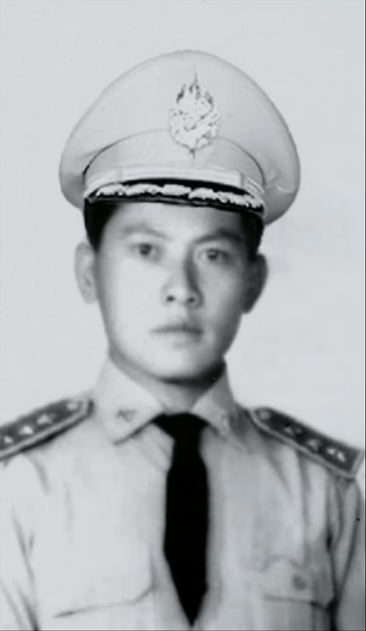
Lt. Colonel Chong Koua Vue was born on February 14, 1932, in Kong Kah Chaoh, Kha Mouah Province, Laos. In 1955, Chong Koua was appointed Taseng of Thamta, Mouang Nyat.
His career in the military emerged in 1956 when he was a lone civilian leader (Taseng) who’ve fought and prevented the Pathet Lao-Communist from intruding into the village where he served. The Lao government heard of his bravely and honored him with a medal of honor. In 1958, as the war spread to all part of Laos, the Lao government created a special military group called, MA-KEE 1001 (ADC Military Group) which required the region to be headed by Taseng Chong Koua. This special unit was operated under the direction of Colonel Vang Pao of Region 2. In 1961, while still in his military capacity, he was promoted to Naikong to oversee Mouang Mok, Mouang Nyat, Naj Xoom, Naj kiam, Naj Kees and XamXauj.
In 1967, Chong Koua was promoted to Lieutenant, commander of Battalion 205. That same year, he was chosen to attend a special military and leadership strategic training in Long Cheng.
Upon returned, he was promoted to Captain in 1968, and then to Major (Commandant) in 1970, overseeing GM 25, Lima Site 360. It was at this time that General Vang Pao changed the name ADC to SGU (Special Guerilla Unit).
And in 1972, Chong Koua was promoted Lieutenant Colonel, overseeing Naj Hiab, Lima Site 360. Battalion 209.
In 1967, Chong Koua was promoted to Lieutenant, commander of Battalion 205. That same year, he was chosen to attend a special military and leadership strategic training in Long Cheng. Upon returned, he was promoted to Captain in 1968, and then to Major (Commandant) in 1970, overseeing GM 25, Lima Site 360. It was at this time that General Vang Pao changed the name ADC to SGU (Special Guerilla Unit). And in 1972, Chong Koua was promoted Lieutenant Colonel, overseeing Naj Hiab, Lima Site 360. Battalion 209. Lt. Chong Koua was assassinated on November 16th, 1974. in Long Cheng, in a dispute over power.
Captain Pa Vue Vue (Paj Vws Vwj) was born in Mueng Nya (Moos Nyaj) to Pa Tou Vue (Paj Tub Vwj) and Zoua Lee (Zuag Lis) around the winter of 1947. He had three brothers who all passed away during the Secret War. As the youngest of four he learned to be patient, kind, and helpful to his parents and cousins. He excelled in school and soon became a teacher in his home village of Meung Nya. His reputation as a patient, but effective school teacher led his cousin Lieutenant Colonel Chong Koua Vue (Txooj Kuam Vwj) to insist that he move to Meung Mok (Moos Mauj) to teach at the military base. He began teaching the younger children 4-7 years old, then the next year he was promoted to teach the 8-12-year-old students. That year he met Houa Vang (Huas Vaj) and they began a courtship for one year, after which they wedded as husband and wife. In the years that Houa could not conceive, Pa Vue Vue never criticized her, but always loved her. They did eventually have two daughters, Mee (Mim) and Pa (Paj).
Lt. Col. Chong Koua Vue asked Pa Vue to stop teaching and join the army to support the fight against communism. He went to train in Thailand for six months, and then in Meung Cha (Moos Cab) to finish out the year. He came back at the rank of Sergeant (Xosxoom). He oversaw the flights in and out of Long Cheng (Looj Ceeb). At times he would also go on supply drops to support the troops and Hmong villagers who had been raided by the North Vietnamese Army.
In January of 1973, the Paris Peace Accords was signed. General Vang Pao was instructed to close the CIA-backed, Hmong Base of Long Cheng. Major Cher Tong Vue was an officer in Long Cheng; he wanted to go back to Meung Mok where Lt Col Chong Koua Vue was
stationed and governing. General Vang Pao asked that they work this out between them- selves “since they were cousins.” According to those who witnessed the events, not long
after Major Cher Tong Vue arrived at Moua Sue’s (Muas Xwm) house, he yelled out, “You two bastards are going to die! (Neb ob niag tsov tom yuav tuag laud!” Captain Pa Vue who was the bodyguard of Lt Col Chong Koua, moved to calm down the situation. Suddenly gunshots rang throughout, and within seconds both Captain Pa Vue and Chong Koua were dead. Pa Vue Vue was only 26 years old. He left behind his widow, Houa Vang, who ended up in the Chao Fa (Caub Fab) resistance army at Mount Thalava (Phu Tas Las Vav) for three years where she lost her youngest daughter Pa. Their daughter Mee survived and now has four daughters of her own.
Capt. Pa Vue Vue was an honorable soldier who left the esteemed profession of teacher to fight for his country. His untimely death came as a result of a dispute that has scarred the Vue family for generations. His widow Houa would like the younger generation to value family and life above status and titles.